
Scoliosis Surgery (Spinal Deformity Correction)
Surgical correction for scoliosis and spinal deformities
Scoliosis surgery is a procedure performed to correct abnormal spinal curvature and improve spinal balance in patients with scoliosis. The goal is to reduce the degree of curvature, prevent further progression, and support better posture and function. Surgery may also help relieve pain or discomfort caused by the condition. At Melbourne Orthopaedic Clinic, scoliosis surgery is planned following a thorough assessment of the type and severity of the curve, the patient’s age, symptoms, and overall health. Advanced surgical techniques and modern instrumentation are used to support safe correction and long-term spinal stability.
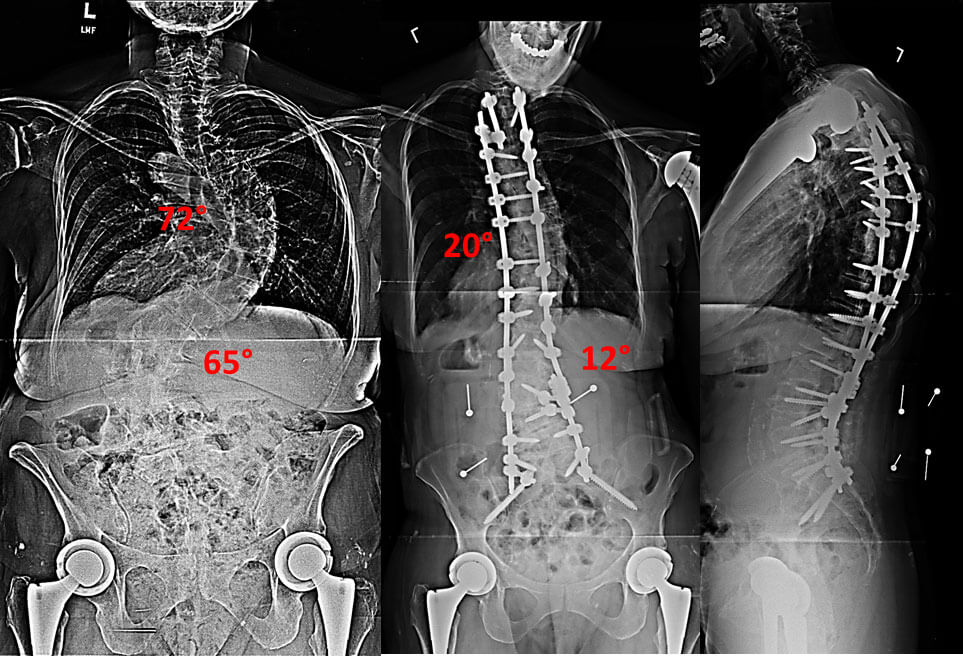
What is Scoliosis?
Scoliosis is a condition where the spine curves sideways, often forming an “S” or “C” shape rather than remaining straight. The curve can develop in the upper (thoracic), middle, or lower (lumbar) regions of the spine, and in some cases may involve multiple areas.
While mild scoliosis may not cause significant symptoms, more pronounced curves can lead to visible changes in posture, uneven shoulders or hips, back pain, and in severe cases, reduced lung function. Scoliosis can appear during childhood or adolescence (adolescent idiopathic scoliosis), or it can develop later in life as a result of degenerative changes in the spine.
Indications for Scoliosis Surgery
Scoliosis surgery may be considered when the spinal curve is severe, continues to progress, or causes significant symptoms that affect daily life. While many people with scoliosis can be managed with observation, physiotherapy, or bracing, surgery is usually recommended in situations such as:
- Severe spinal curvature – generally when the curve measures greater than 40–50 degrees and is at risk of worsening.
- Progressive deformity – when the curvature continues to increase despite non-surgical management.
- Persistent pain – if back pain or discomfort linked to scoliosis does not improve with non-surgical treatments.
- Neurological symptoms – such as numbness, tingling, or weakness caused by nerve compression from the spinal curve.
- Impact on lung or heart function – in cases where a severe curve restricts breathing or places strain on the heart.
- Cosmetic or postural concerns – when the curve leads to visible deformity that significantly affects posture, balance, or quality of life.
The decision to proceed with surgery is carefully based on the severity of the curve, your symptoms, age, overall health, and personal goals. A thorough discussion with your surgeon ensures that all options are considered before recommending surgical intervention.
The Scoliosis Surgery Procedure
- Anaesthesia: The patient is placed under general anaesthesia to ensure comfort during the procedure.
- Incision: A surgical incision is made along the back to access the spine.
- Spinal Fusion: The surgeon uses bone grafts and implants (rods, screws, or hooks) to stabilise the spine and correct the curvature.
- Alignment Correction: The spine is carefully aligned, and the grafts are secured to promote healing and fusion.
- Closure: The incision is closed with sutures or staples, and a sterile dressing is applied.
Recovery After Scoliosis Surgery
Recovery from scoliosis surgery is a gradual process that involves careful post-operative care, rehabilitation, and regular follow-up appointments. The aim is to allow the spine to heal, improve stability, and safely return you to normal activities.
- Hospital stay
Most patients stay in hospital for 5–7 days following surgery. During this time, pain is managed, and you will be supported to begin gentle movements such as sitting, standing, and walking with assistance. - Early recovery at home
Once discharged, rest and limited activity are encouraged. Bending, twisting, and lifting should be avoided while the spine heals. Wound care instructions will be provided, and you will have follow-up appointments to monitor progress. - Physiotherapy and rehabilitation
Physiotherapy plays an important role in regaining mobility and strength. A tailored programme is usually introduced gradually, focusing on safe stretching, strengthening exercises, and posture training. - Return to activities
Many people can return to school or work within 4–6 weeks, depending on the demands of their daily routine. More strenuous activities, including sports and heavy lifting, are typically restricted for several months until the spine has adequately fused. - Long-term recovery
Spinal fusion may take 6–12 months to fully consolidate. Regular reviews with your surgeon ensure that the spine is healing as expected and that your activity levels can be safely increased over time.

Long-term Outcomes
The long-term outcomes of scoliosis surgery are generally positive, with many patients experiencing lasting improvements in spinal alignment, reduced pain, and better overall function. By correcting the spinal curve, surgery often helps prevent the progression of deformity and can improve posture and appearance. For most people, daily activities can be resumed without major restrictions once the spine has fully healed. While spinal fusion limits movement at the fused segments, most patients adapt well and continue to enjoy active lifestyles. Improvements in quality of life, such as reduced discomfort, greater mobility, and enhanced confidence, are commonly reported.
Regular follow-up is important to monitor the stability of the spine and detect any potential late complications, such as adjacent segment wear or hardware issues. In the majority of cases, outcomes remain stable over the long term, allowing patients to maintain independence and a good level of physical activity.
Risks and Complications
As with any major surgery, scoliosis surgery carries some potential risks and complications. While advances in surgical techniques and post-operative care have improved safety, it is important to be aware of the possible issues, which may include:
- Infection at the surgical site.
- Excessive bleeding during or after surgery.
- Nerve injury that may cause numbness, tingling, or weakness.
- Failure of bone fusion (non-union or pseudoarthrosis).
- Hardware problems, such as screw or rod movement or breakage.
- Adjacent segment wear, where nearby spinal levels take on added stress.
- Persistent or recurrent pain, even after the curve has been corrected.
- General risks of anaesthesia, such as reactions or complications.
Your surgeon will discuss these risks with you before surgery and outline the steps taken to minimise them. Careful monitoring, early mobilisation, and structured rehabilitation all contribute to safe recovery and improved long-term results.