Malunion or Nonunion of Hand Bones
A condition involving improper or delayed healing of fractured hand bones
The small bones of the hand are vital for precise movement, strength, and coordination. When a fracture occurs, most bones heal with the help of appropriate treatment such as splinting, casting, or surgery. In some cases, however, the bone may not heal as expected.
- Malunion occurs when a fractured bone heals in the wrong position. This can lead to deformity, stiffness, reduced grip strength, or difficulty with fine hand movements.
- Nonunion occurs when a fractured bone fails to heal altogether. This may cause ongoing pain, instability, and weakness in the affected hand.
Both conditions can significantly affect hand function and make everyday tasks more difficult. They may result from severe injuries, delayed treatment, infection, poor blood supply to the bone, or repeated stress at the fracture site.
Causes of Malunion or Nonunion of Hand Bones
Several factors can lead to malunion or nonunion, including:
- Insufficient immobilisation: If a fractured bone isn’t adequately stabilised during the healing process, it may heal in a misaligned position (malunion) or fail to heal entirely (nonunion).
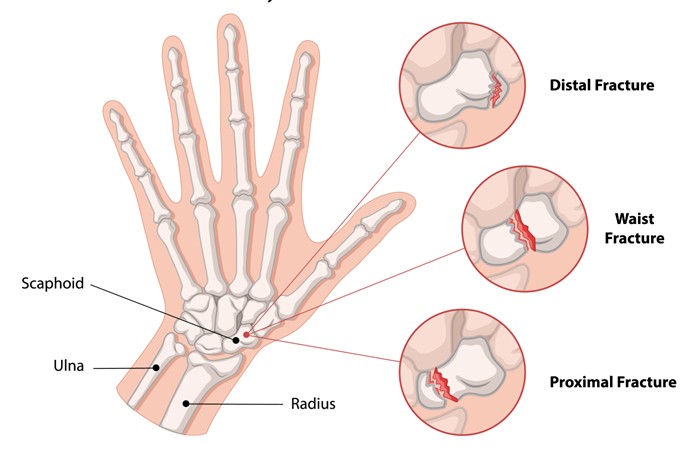
- Poor blood supply: Bones in certain areas of the hand, like the scaphoid, have limited blood flow, which can impair healing and increase the risk of nonunion.
- Infection: Infections following an initial fracture or surgical intervention can hinder the healing process, leading to nonunion or improper healing.
- Complex fractures: Fractures that are significantly displaced, involve multiple fragments, or occur near joints may be more prone to malunion or nonunion.
Symptoms of Malunion or Nonunion of Hand Bones
Signs and symptoms of these conditions may include:
- Pain and swelling: Persistent pain and swelling around the fracture site, even after the expected healing period.
- Limited range of motion: Difficulty moving the affected finger or hand, with reduced grip strength and flexibility.
- Visible deformity: Malunion can lead to visible irregularities or misalignment in the shape of the hand or finger.
- Weakness in the hand: Reduced hand strength, making it difficult to perform daily tasks requiring grip or pinch strength.
Diagnosis of Malunion or Nonunion of Hand Bones
Diagnosing a malunion or nonunion involves careful assessment of your symptoms, hand function, and imaging to determine how the bone has healed.
- Medical history
- Prof Sallen will ask about the original injury, how it was treated, and whether you have had ongoing pain, stiffness, or weakness since the fracture.
- Details about your occupation, hobbies, and daily activities are important in understanding how the problem affects your hand function.
- Physical examination
- The hand is examined for deformity, swelling, or abnormal alignment of the fingers.
- Grip strength, range of motion, and stability of the joints are assessed.
- Areas of tenderness or instability may suggest incomplete healing.
- Imaging tests
- X-rays are the most common and provide clear information about how the bone has healed. They can show whether the bone is out of alignment (malunion) or if the fracture gap remains (nonunion).
- CT scans may be used for more complex injuries to give a detailed 3D view of bone position and healing.
- MRI scans may occasionally be recommended to assess the surrounding soft tissues and blood supply to the bone.
- Additional investigations
- In cases of suspected infection contributing to nonunion, blood tests may be arranged to look for signs of inflammation.
By combining these findings, Prof Sallen can confirm whether a malunion or nonunion is present and recommend the most appropriate treatment options to restore function and reduce discomfort.
Treatment Options for Malunion or Nonunion of Hand Bones
The aim of treatment is to restore bone alignment, promote healing, and improve hand function. The best approach depends on the location of the fracture, the degree of deformity, and the symptoms you are experiencing.
Non-surgical management
In selected cases, particularly where symptoms are mild and function is preserved, non-surgical treatment may be appropriate. This may include:
- Splinting or bracing – To support the hand and reduce discomfort.
- Activity modification – Avoiding activities that aggravate pain or strain the affected area.
- Hand therapy – Exercises and strategies to maximise strength and flexibility, even when the bone has not healed perfectly.
Non-surgical management is generally reserved for small deformities or for patients who are not suitable for surgery.
When symptoms are significant, or when hand function is impaired, surgery may be recommended. Procedures can include:
- Corrective osteotomy – The malunited bone is surgically cut, realigned, and fixed in the correct position using plates, screws, or wires.
- Bone grafting – In cases of nonunion, bone graft material may be added to stimulate healing and fill any gap at the fracture site.
- Internal fixation – Plates, screws, or pins are used to stabilise the bone and hold it in place while healing occurs.
- External fixation – In complex cases, an external frame may be used to gradually correct alignment or support healing.
Recovery and rehabilitation
- After surgery, the hand is usually protected in a splint or cast for a period of time.
- Hand therapy plays a key role in regaining motion, strength, and coordination.
- Healing times vary, but most patients require several months for full recovery.
Prof Sallen will explain the treatment options most suitable for your condition, taking into account your symptoms, lifestyle, and overall health, and will guide you through the recovery process step by step.