Scoliosis
A condition characterised by an abnormal curvature of the spine
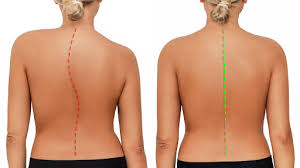
Scoliosis is a condition where the spine curves abnormally to the side, often forming an “S” or “C” shape. It can develop in children and adolescents, commonly during growth spurts, but may also occur in adults due to age-related changes in the spine.
The severity of scoliosis varies. Mild curves may cause little or no discomfort and may simply be monitored over time, while more significant curves can lead to pain, reduced mobility, or functional difficulties. Management options depend on the degree of curvature, symptoms, and age of the patient, and may include observation, physiotherapy, bracing, or surgery in more severe cases.
Causes of Scoliosis
Scoliosis can arise from various factors, including:
- Idiopathic Scoliosis: The most common type, where the cause is unknown, typically occurring in adolescents during growth spurts.
- Congenital Scoliosis: Caused by abnormal spinal development in the womb, leading to structural deformities.
- Neuromuscular Conditions: Conditions such as cerebral palsy or muscular dystrophy can affect muscle control and lead to spinal curvature.
- Degenerative Changes: In adults, degenerative changes in the spine, such as arthritis or disc degeneration, can contribute to the development of scoliosis.
- Injury or Trauma: Previous injuries to the spine may also result in abnormal curvatures over time.
Symptoms of Scoliosis
Symptoms of scoliosis can vary in severity and may include:
- Visible Curvature: An obvious sideways curvature of the spine, which can be noticeable when viewing the back.
- Uneven Shoulders or Hips: Asymmetry in shoulder height or hip alignment, often leading to one shoulder or hip appearing higher than the other.
- Back Pain: Discomfort or pain in the back, particularly in cases of severe curvature.
- Limited Range of Motion: Difficulty bending, twisting, or performing certain activities due to stiffness or discomfort.
Diagnosis of Scoliosis
Diagnosis begins with a detailed medical history and physical examination. Prof. Hunt will ask about symptoms such as back pain, uneven shoulders, or changes in posture, and may look for visible signs of spinal curvature while you are standing and bending forward.
Physical examination
- Observation of shoulder height, waist symmetry, and rib cage alignment.
- The Adam’s forward bend test, where you bend forward at the waist, may be used to highlight unevenness in the back or ribs.
- Neurological checks may be carried out to assess muscle strength, reflexes, and sensation.
Imaging tests
To confirm the presence and severity of scoliosis, imaging may be recommended:
- X-rays – The most common test, used to measure the degree of curvature (Cobb angle) and monitor progression over time.
- MRI or CT scans – May be ordered if there are concerns about nerve involvement, spinal cord abnormalities, or complex deformities.
The information gained from physical examination and imaging helps determine whether the scoliosis requires monitoring, non-surgical management, or surgical intervention.
Treatment Options for Scoliosis
Management of scoliosis depends on the severity of the spinal curve, the patient’s age, symptoms, and the likelihood of the curve progressing. Not all cases require active treatment, some may only need observation and regular monitoring.
Non-surgical treatments
- Observation – For mild curves, especially in children and adolescents, regular check-ups and X-rays may be recommended to track changes as the spine grows.
- Physiotherapy – Exercises may help strengthen supporting muscles, improve posture, and reduce discomfort, although they do not usually correct the curvature.
- Bracing – In adolescents with a moderate curve who are still growing, a brace may be prescribed to prevent the curve from worsening. Bracing is not typically used for adults.
- Pain management – Medications or targeted exercise programs may be used to relieve pain in cases where scoliosis is causing discomfort.
Surgical treatments
Surgery may be considered for severe curves, curves that are worsening, or when scoliosis is significantly affecting function or quality of life. Options include:
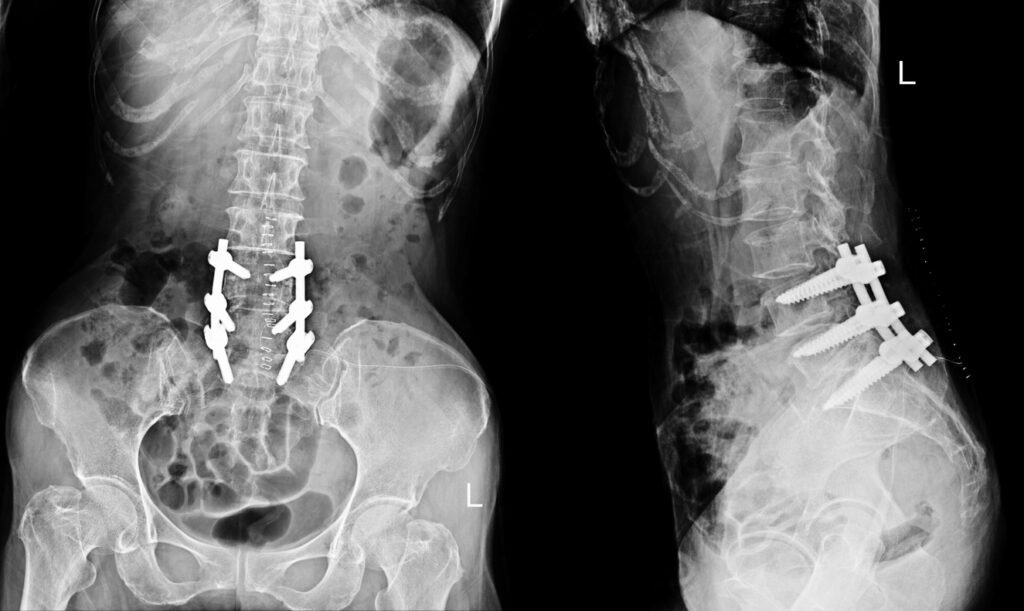
- Spinal fusion – The most common surgical approach, where two or more vertebrae are joined together with rods, screws, or bone grafts to correct and stabilise the curve.
- Other corrective procedures – In selected cases, newer techniques or growth-modulating devices may be considered, particularly in younger patients who are still growing.
The decision to proceed with surgery is based on several factors, including the degree of curvature, symptoms, overall health, and patient goals.